.png)

How AI agents will drastically change your job
AI agents are entering the workplace fast. Quietly at first. Then suddenly visible everywhere. In documents. In calls. In tools that used to be simple. The result is clear. Daily work will not look the same in a few years.
This shift is not abstract. It touches tasks, roles, and careers. It influences who does what in a team. It changes what is seen as valuable work. It also raises a simple but pressing question. What does this mean for your own job.
Many employees see the same pattern. More tools. More data. More pressure. Less time for the work that really matters. The work that requires judgment, experience, and creativity. The work you were trained to do.
AI agents promise a different balance. Repetitive work moves to software. Routine choices move to algorithms. You gain extra hours. Not as free time. But as space to focus on core responsibilities. Eindelijk meer tijd voor het werk waarvoor je bent opgeleid door de opkomst van AI Agents. That is the central promise. And also the central challenge.
This article explains how AI agents will drastically change your job. It looks at concrete changes in tasks. It shows which skills become more important. It explores how roles will shift inside organizations. And it outlines what you can do now to stay ahead of this wave.
From task performer to supervisor of AI agents
In many jobs, work is still organized around manual tasks. Collecting information. Updating records. Drafting the first version of a document. Preparing a summary after a meeting. These are activities that take time. They require attention. But they do not always require deep expertise.
AI agents can already handle a large part of this workload. They can search, compare, and structure information. They can draft proposals based on fixed templates. They can monitor data streams and flag anomalies. They can follow predefined workflows and keep logs of every step.
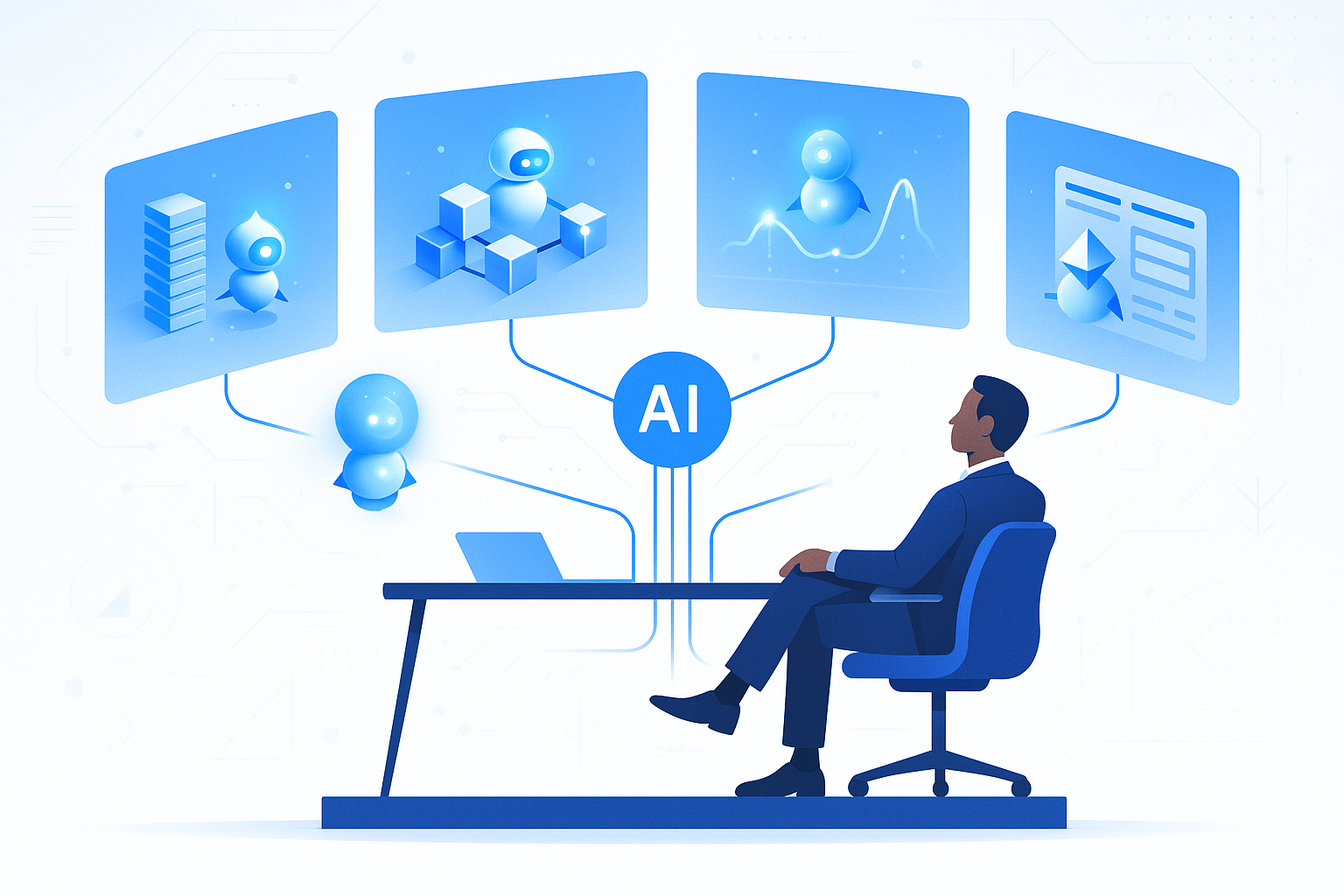
That changes the role of the human professional. Instead of performing each step, people increasingly design, guide, and evaluate automated workflows. The work moves from doing to supervising. From manual execution to quality control. From repetitive action to strategic decision.
This shift has several consequences. Routine expertise becomes less important. Understanding the broader context becomes more important. Knowing how to click through a system is no longer enough. You must also understand what the system is doing, why it is doing it, and when it should stop.
In practice, this means that many professionals will work with a personal layer of AI agents. These agents prepare drafts, recommendations, and overviews. The human decides what happens next. Approve, adjust, or reject. The focus moves to interpretation and responsibility. The system can suggest. The human remains accountable.
For organizations, this creates a new type of function. Professionals who can translate processes into instructions for AI agents. People who understand both the domain and the technology. Not as programmers, but as architects of digital workflows. These profiles will become crucial in the coming years.
More time for core expertise, less time for routine
One of the strongest promises of AI agents is simple. They remove friction. They take over the small tasks that fragment a workday. Searching for the right file. Copying data between systems. Writing the same email for the tenth time. Logging every step in a tool purely for reporting.
These activities do not define a profession. They surround it. They are necessary, but they are not the reason someone chose a certain career. They cost energy, but they create limited value. Yet they fill a large part of many schedules.
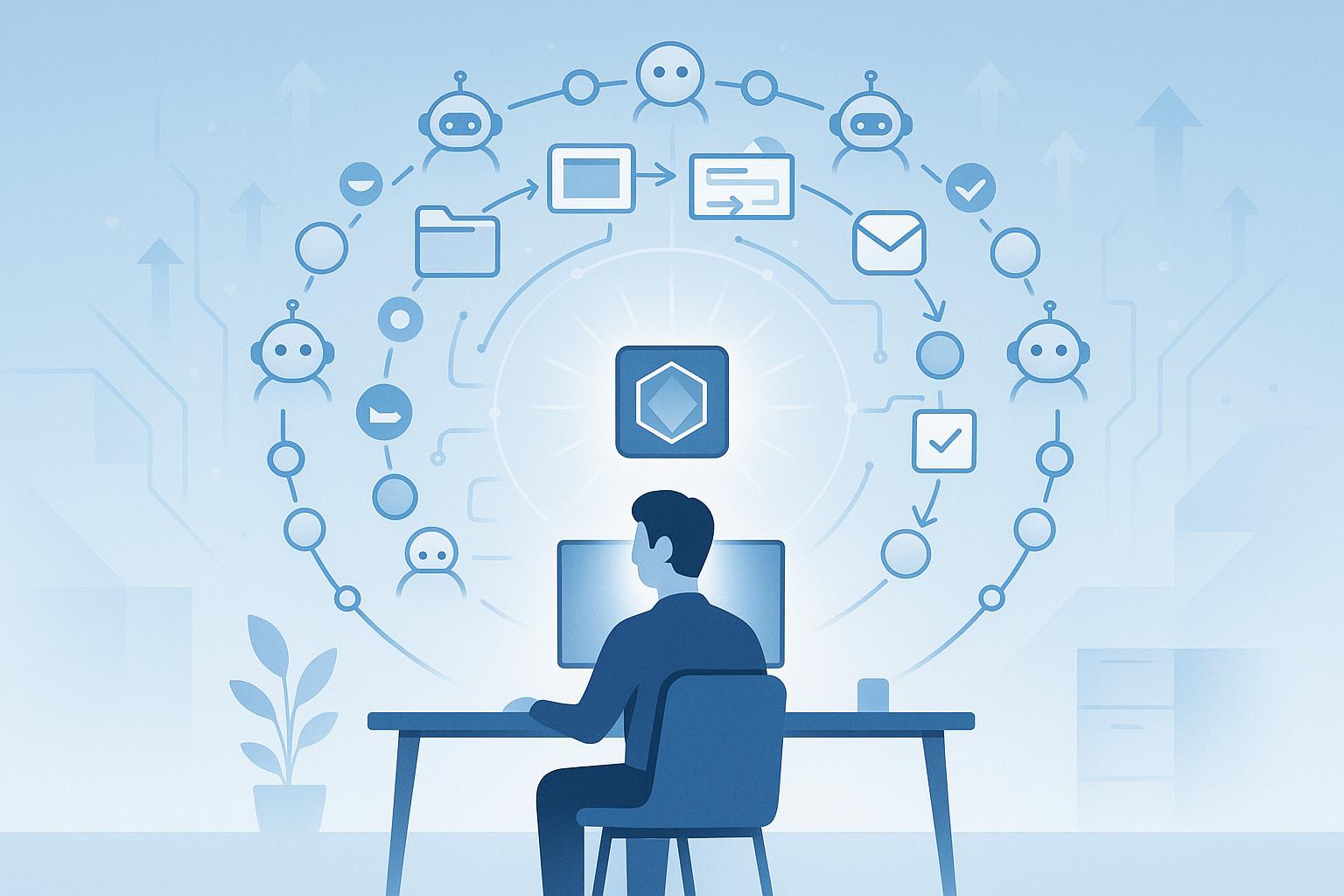
AI agents can automate much of this surrounding work. They can listen to meetings and create structured notes. They can track actions and assign them to the right person. They can prefill forms based on context. They can prepare personalized answers based on existing knowledge.
This frees up hours for the work that actually requires human judgment. For complex client conversations. For strategic decisions. For creative exploration. For building relationships and trust. For the type of work that is difficult to standardize and difficult to replace.
Eindelijk meer tijd voor het werk waarvoor je bent opgeleid door de opkomst van AI Agents. That line captures the essence. AI does not only cut costs. It can also restore the original core of many professions. Teachers who spend more time with students and less on administration. Lawyers who focus more on strategy and less on document search. Consultants who invest more in analysis and less in slide formatting.
At the same time, this shift raises a new requirement. If the routine disappears, what remains must be strong. Core expertise becomes more visible. Mistakes are less hidden in a long list of small tasks. Your added value must be clear in every interaction. That asks for continuous learning and a clear view of what you bring to the table that an AI agent cannot.
New skills for an AI supported workplace
Working with AI agents is not only a technical change. It is also a skills shift. The tools may feel intuitive. But using them effectively requires a different mindset. Not more buttons. More reflection on how work is structured.
One key skill is problem framing. AI agents are strong when the assignment is clear. Vague questions lead to vague outcomes. Professionals must learn to translate complex problems into concrete steps. What information is needed. Which constraints apply. Which result is acceptable. This type of structuring becomes part of daily work.
A second skill is critical evaluation. AI output often looks confident. That does not mean it is correct. Professionals need to be able to check, compare, and validate. They must recognize patterns that do not fit. They must know when to trust an automated suggestion and when to dig deeper. This is not blind faith in technology. It is disciplined skepticism.
A third element is collaboration with digital systems. AI agents are not colleagues, but they are also not simple tools. They act, adapt, and learn from data. That creates new interaction patterns. Short prompts replace long instructions. Iterative refinement replaces static briefings. You test, adjust, and test again. The ability to work in this loop becomes a practical advantage.
Communication skills also gain weight. As more routine tasks are automated, human contact moments become more important. Clients, partners, and colleagues expect clarity. They want to understand how decisions are made. They want transparency about the role of AI. Professionals who can explain complex processes in simple language will stand out.
Finally, there is a mindset aspect. Curiosity about new tools. Willingness to experiment. Comfort with change. These traits are not reserved for technical roles. They become basic requirements in almost every knowledge job. Those who ignore AI agents risk being bypassed by those who embrace them early and learn their strengths and limitations.
How to prepare your career for AI agents
The arrival of AI agents will not be a single event. It is a gradual process. First in small tools. Then in core systems. First at the edge of your job. Then in the middle of it. Waiting for a clear before and after moment is not realistic. Preparation starts while the landscape is still shifting.
A practical first step is simple observation. Where in your current work do you repeat the same action many times. Which tasks feel mechanical rather than thoughtful. Which activities mainly move information from one place to another. These are the areas where AI agents will enter first.
Map these tasks and imagine what would happen if they disappeared or were greatly reduced. Which parts of your day would remain. How would you fill the freed time. Which activities would you like to do more. Which responsibilities would you like to develop further. This exercise clarifies your desired direction before the technology forces a change.
The second step is learning by doing. Many AI tools are already available. Start small. Use an agent to summarize long texts. To draft a first version of a report. To propose a structure for a presentation. Not to replace your work, but to accelerate the first steps. Evaluate the results critically and refine your instructions. Over time, you will build intuition for what works and what does not.
A third step is investing in your unique strengths. Ask yourself what aspects of your role rely most on human qualities. Empathy. Ethical judgment. Creative association. Complex negotiation. Long term relationship building. These elements are difficult to automate. They are also the areas where you can build lasting value.
Finally, engage in the conversation inside your organization. AI strategy is no longer only a topic for IT or management. It affects every department. Share observations about where AI agents could help. Raise questions about transparency and responsibility. Ask how training and support will be organized. Those who join this discussion early help shape the future of work instead of undergoing it.
AI Agents veranderen je werk drastisch. Dit betekent het voor jouw baan. Tasks will shift. Roles will evolve. Demands on skills will rise. Yet the core opportunity is positive. If applied thoughtfully, AI agents can pull routine to the background and bring real expertise to the front. The professionals who prepare for that shift now will be the ones who benefit most when AI becomes an integral part of every job.